

AI Bot Myths
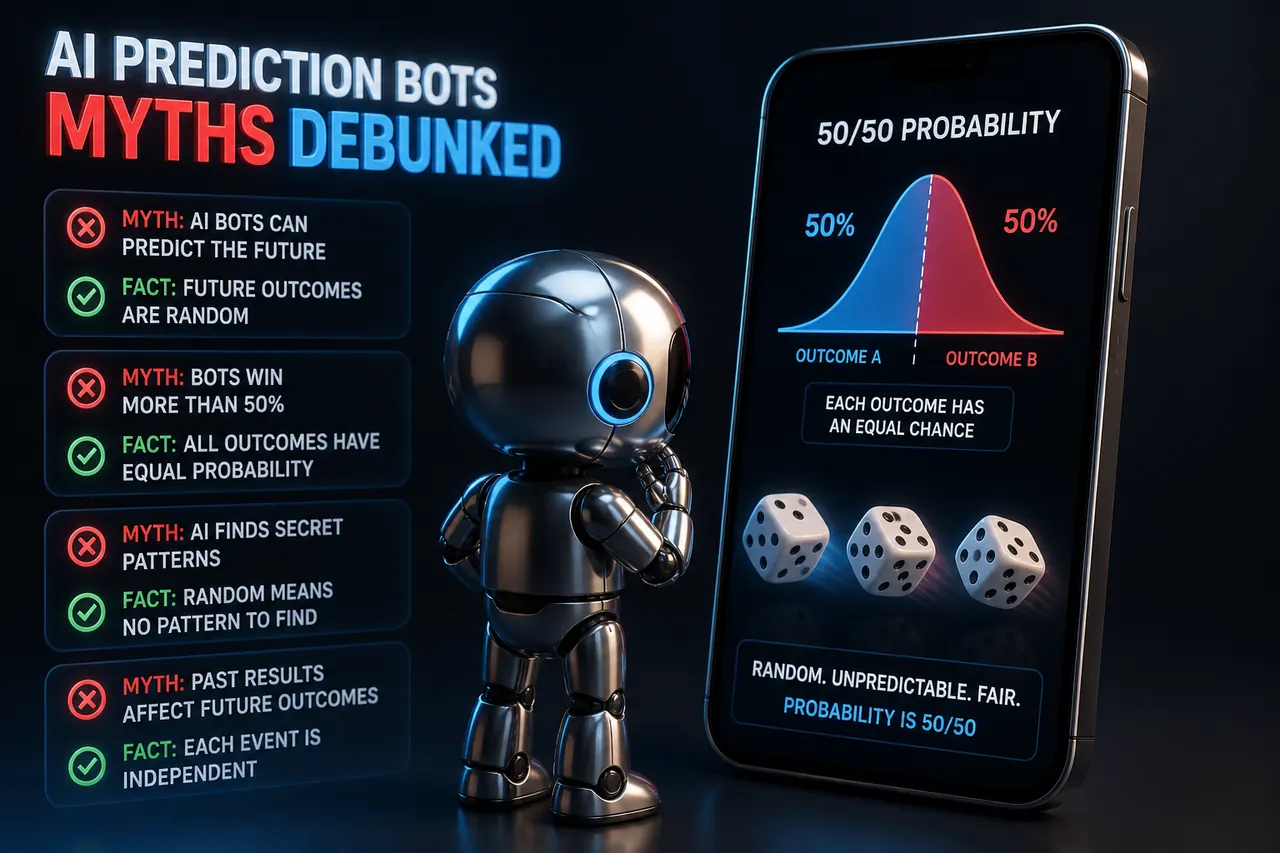
The phrase big small prediction ai bot sounds modern, data-driven, and precise. That is exactly why it attracts attention. In practice, most AI bot claims in this niche reuse old certainty tactics with new technical vocabulary.
This article is not anti-technology. It is pro-verification. AI can support analysis tasks, but "bot" branding alone does not prove predictive reliability in independent random rounds.
big small prediction guide
Why AI language is persuasive
AI implies scale, speed, and intelligence. Readers assume a machine can detect hidden patterns humans miss. That assumption can be reasonable in some domains, but it still requires transparent evidence.
In Big Small promotion pages, "AI" is often used as an authority shortcut. There is usually no method disclosure, no reproducible test protocol, and no complete loss log.
The marketing effect is strong because uncertainty feels uncomfortable. AI branding promises relief from uncertainty. Unfortunately, promise is not proof.
big small prediction guide
What transparent bot evidence would require
A credible system would need:
- clearly defined input data scope
- explicit prediction timing rules
- full-session logs including failures
- out-of-sample evaluation, not cherry-picked clips
- stable performance reporting over time
Most public bot channels provide none of this. They present fragments that maximize emotional confidence.
big small prediction guide
Red flags in typical AI bot funnels
Watch for these patterns:
- BGuaranteed success wording
- S"Limited seats" urgency after screenshot dumps
- BHidden failures and deleted history
- SPaid upgrade required before basic testing
- BVague references to "proprietary model confidence"
When multiple red flags appear together, the goal is likely conversion, not education.
big small prediction guide
The screenshot confidence trap
AI bot ads often use high-frequency screenshot streams. Volume creates an illusion of proof. Yet without timestamps, complete sequence integrity, and visible misses, screenshot volume means little.
A long image thread can still be selective. If every shown call wins, skepticism should increase, not decrease. Real systems in uncertain environments produce mixed outcomes.
big small prediction guide
Can AI tools still help in any way?
Yes, but in a limited role. AI can assist with note summaries, routine reminders, and post-session pattern descriptions. Those uses improve reflection quality. They do not justify deterministic outcome claims.
This is the healthy split:
- Useful role: behavior support and analysis structure
- Unsafe role: guaranteed next-round prediction engine
Confusing these roles is the source of most bot-related disappointment.
big small prediction guide
A practical claim-check framework
Before trusting any bot:
- BDemand complete logs, not highlight reels.
- SVerify that failures remain visible over time.
- BReject absolute language immediately.
- STest behavior support value in demo conditions.
- BAvoid payment pressure tied to certainty claims.
If the provider cannot pass basic transparency checks, you already have your answer.
big small prediction guide
Bottom line
AI bot myths persist because they match emotional needs: speed, certainty, and control. But independent rounds do not become deterministic because a page adds technical vocabulary. Use AI tools for organization if useful. Reject certainty narratives that cannot survive transparent review.
FAQ
Are all AI bots fake?
Not every tool is fake, but certainty-focused claims are frequently unsupported. Evaluate transparency before trusting performance promises.
What is the strongest red flag?
Guaranteed outcomes paired with urgency and hidden loss history. That combination usually indicates manipulation.
Can AI improve discipline?
Yes. It can help with reminders, notes, and routine analysis. That is different from predicting every next result.
Why are complete logs so important?
Because cherry-picked wins can be fabricated or selectively shown. Full logs reveal whether claims hold under real conditions.
Should I pay for private AI channels?
Only after rigorous verification, and never if certainty is the main selling point. Most users are safer staying with transparent demo-first practice.
By Meera Iyer - Prediction Myths Editor