
Independent rounds are the reason Big Small training focuses on behaviour, not on cracking a sequence.
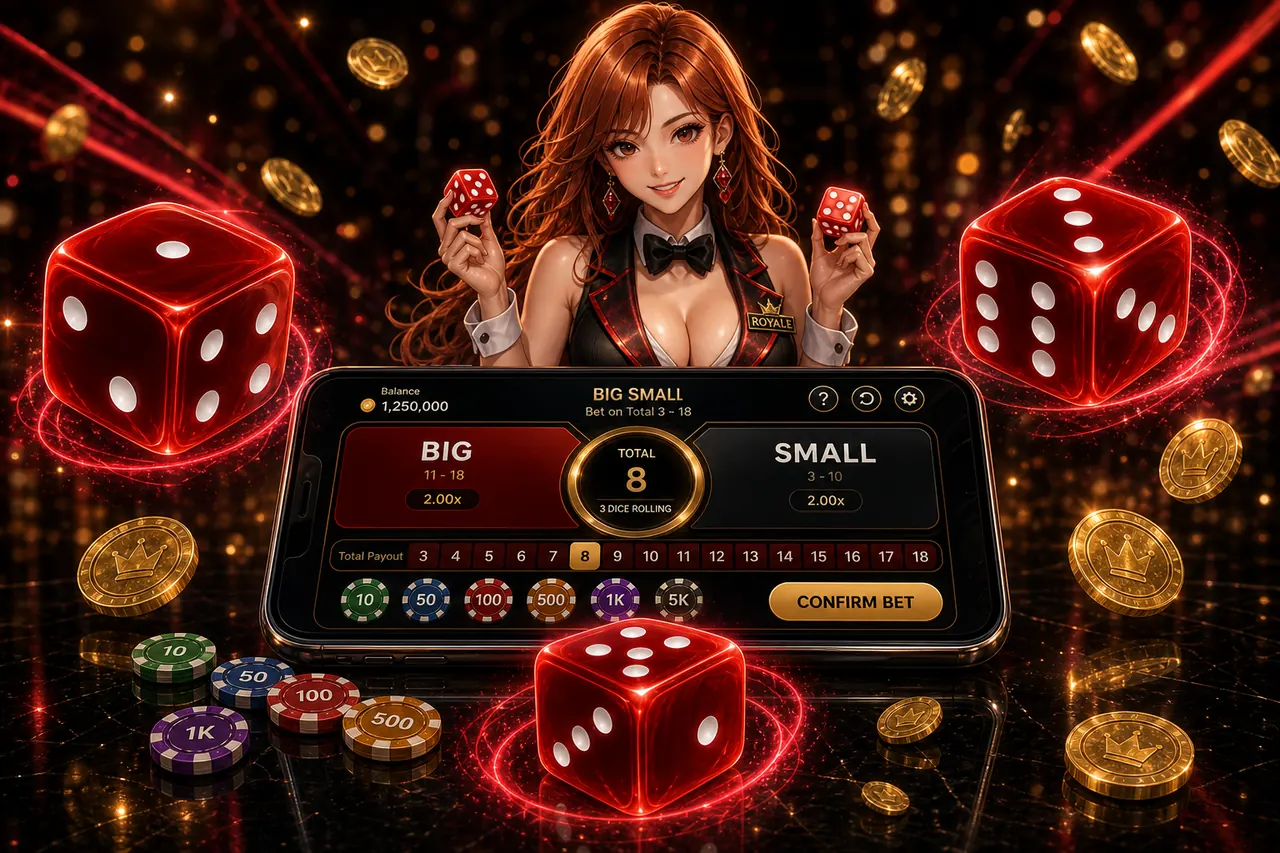
> Past outcomes do not write the next result. Educational only — not financial advice.
big small prediction guide
What “independent” means in practice
The lobby may show a beautiful strip. Your brain may narrate a story. The next resolve still does not owe you balance. That holds for WinGo digits (0–4 / 5–9) and Royale 3-dice sums (3–10 / 11–18).
big small prediction guide
Training implications
- Skip is a valid action when the UI is unclear
- Stake size should come from a pre-written plan (calculator)
- Review logs for process errors, not for “missing the pattern”
- Demo first (demo) so randomness is felt without deposit panic
big small prediction guide
Where people invent memory
- Streak “due” logic — streaks
- Named patterns — pattern myths
- Fixed panels — fixed code
- Bots that “read the server” — ai-bot, hack
big small prediction guide
Probability literacy without fake precision
You do not need advanced formulas to train well. You need to accept variance, cap exposure, and stop when emotion writes the next stake. If someone sells a private model that “removes randomness”, treat it as certainty marketing.
FAQ
If rounds are random, why train at all?
Training reduces operational mistakes and scam exposure. It does not create guaranteed profit.
Can long samples prove a predictable cycle?
Long samples still do not lock the next independent resolve.
Do bots break independence?
Credible public evidence does not support guaranteed bot success on honest random resolves.
Should I study maths before demo?
Learn the format map, then practise. Deep maths is optional; honesty about randomness is not.