
Demo Before Deposit
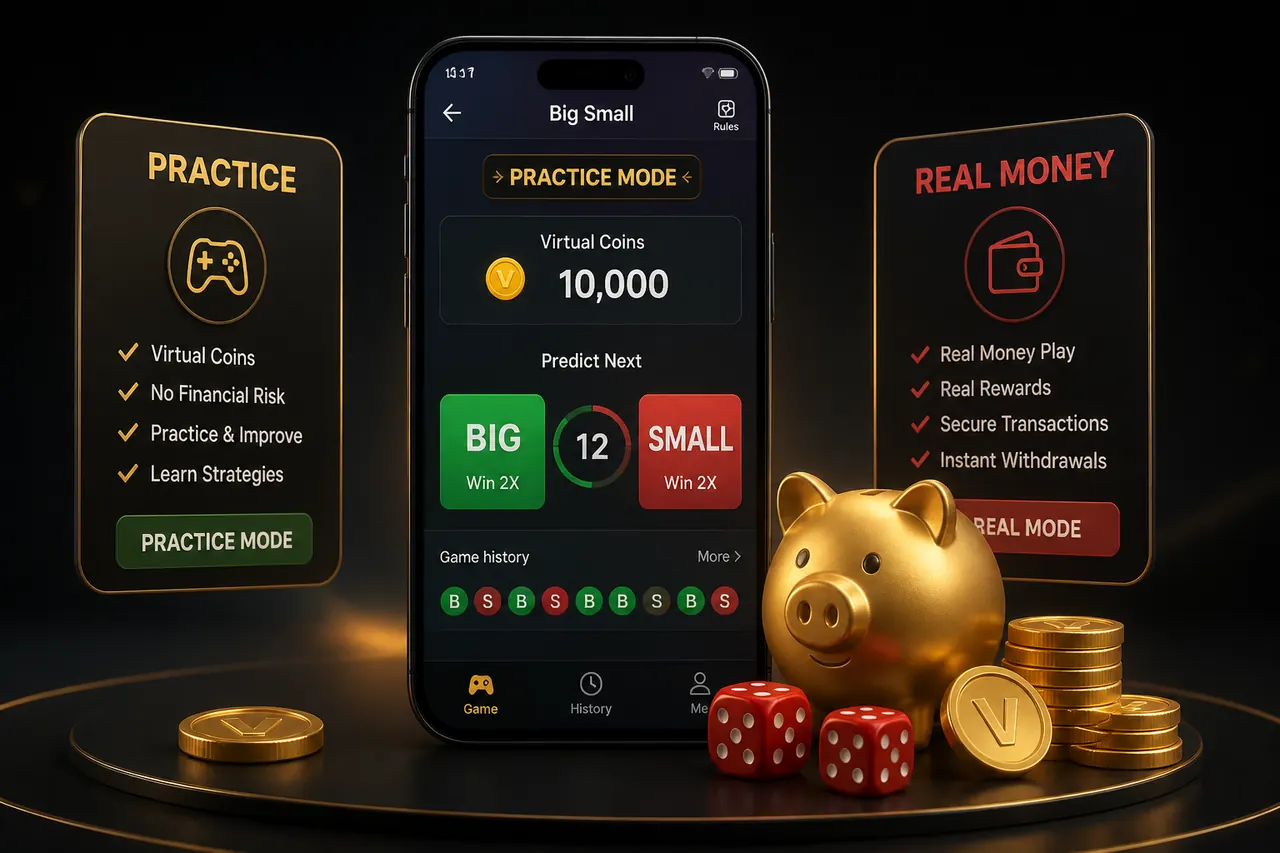
For most readers, the smartest first move in Big Small is simple: practice before money. Demo sessions let you learn timing, button flow, and strip reading without immediate financial pressure. That sounds basic, but skipping this step is one of the most common causes of bad early decisions.
This guide explains why demo-first matters, how to run a useful practice block, and how to decide whether you are ready for any stake at all.
big small prediction guide
What demo mode is actually for
Demo mode is not a fake shortcut to guaranteed performance. It is a training environment for:
- understanding interface flow
- testing your pacing discipline
- checking emotional responses to streaks
- building stop habits before pressure rises
When used properly, demo helps you separate mechanical mistakes from belief mistakes. That distinction improves decision quality.
big small prediction guide
Why users skip demo too early
Many users assume demo is "too easy" or "not real enough" to be useful. In reality, the first failures usually come from process errors: unclear rules, rushed entries, no stop plan, and emotional chasing. Demo is ideal for correcting these before money amplifies stress.
Skipping demo often means learning costly lessons live. That is avoidable.
big small prediction guide
A 20-minute demo routine
Use a short, repeatable routine:
- BSet a 20-minute timer.
- SRun a fixed number of rounds (for example, 12).
- BWrite one sentence before each pick: why this choice?
- SStop exactly when timer or round cap is reached.
- BReview notes for behavior patterns, not lucky outcomes.
The purpose is consistency. If you cannot follow a routine in demo, live conditions will not improve that discipline.
big small prediction guide
What "ready" actually means
Being ready is not about winning most demo rounds. It is about behavior control:
- You follow your stop rule without negotiation.
- You can explain each decision in plain language.
- You do not chase after frustration.
- You remain calm after a miss.
If these are unstable, continue demo. There is no penalty for longer training. There is usually a penalty for rushing.
big small prediction guide
Avoiding demo-to-live illusion
Demo and live share interface mechanics but differ emotionally. Live stake introduces pressure, expectation, and ego sensitivity. That means performance can change even if the buttons look identical.
Treat first live sessions as a separate adaptation phase. Keep stake small, session short, and rules identical to your demo routine. The objective is control transfer, not aggressive scaling.
big small prediction guide
Warning signs to pause immediately
Pause if you notice:
- extending sessions "just for one more recovery round"
- raising stake after emotional misses
- believing a streak must reverse now
- trusting external certainty claims over your own rules
These signs indicate process drift. Returning to demo for recalibration is usually the best move.
big small prediction guide
Practical closing view
Demo-before-deposit is not a motivational slogan. It is a decision-quality filter. If your routine holds in demo, you gain a safer foundation. If it breaks in demo, you discovered risk cheaply. Either result is useful.
FAQ
How long should demo practice last?
Long enough to prove routine consistency across multiple sessions. There is no fixed universal number.
Should I move to live after a few good demo sessions?
Only if your process is stable, not just your outcomes. Behavior control matters more than short-term win counts.
Can demo predict live profitability?
No. Demo is best for skill and discipline training, not guaranteed financial forecasting.
What if demo feels boring?
Boredom is often a sign that you are following structure correctly. That can be a strength, not a weakness.
Is it okay to return to demo later?
Yes. Many disciplined users use demo regularly to reset habits after emotional sessions.
By Rohan Mehta - Practice and Demo Editor