

Safe Practice Habits
Safe practice is not about moral slogans. It is about practical rules that still work when you are tired, distracted, or emotionally tilted. In Big Small, rounds move fast. Without structure, speed becomes the enemy of judgment.
This guide focuses on habits that are easy to apply and hard to misinterpret. No hacks, no certainty promises, and no fake confidence language.
big small prediction guide
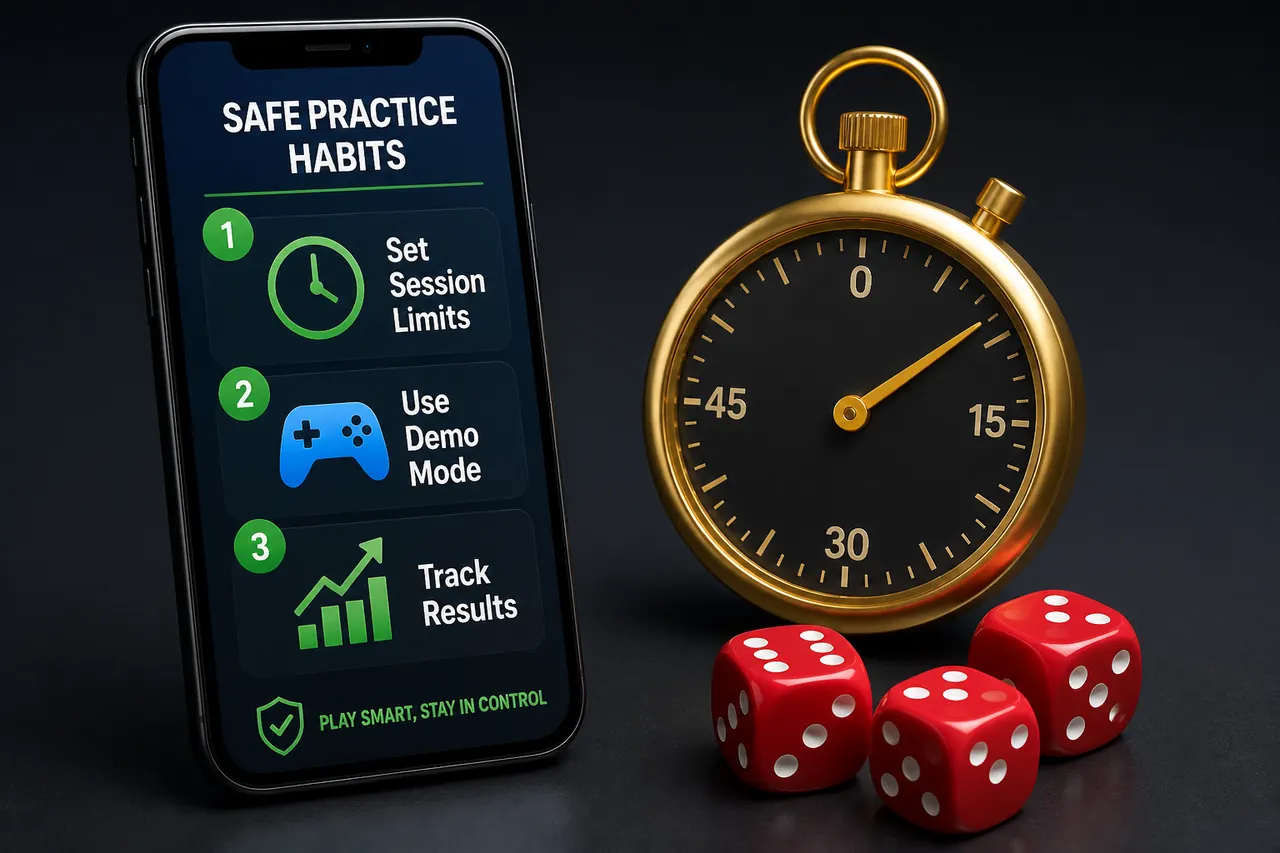
Habit 1: Define limits before session start
Write limits before opening rounds:
- total session time
- maximum number of rounds
- spending cap for live activity
- stop-loss and stop-win boundaries
Pre-commitment prevents in-session negotiation with your own emotions. Decisions made under pressure are usually lower quality than decisions made beforehand. Copy blank fields from the session log template if you want a ready sheet.
big small prediction guide
Habit 2: Keep rounds short and reviewable
Long sessions hide mistakes. Short sessions expose them. A compact block of 10-15 rounds is easier to analyze, easier to stop, and less likely to drift into frustration cycles.
After each block, review behavior:
- Did I follow my plan?
- Did I rush entries?
- Did I change rules mid-session?
This simple review loop builds self-awareness faster than endless play.
big small prediction guide
Habit 3: Demo-first for any new approach
If you want to test a new idea, test in demo first. That includes timing changes, note formats, or tool usage patterns. Demo protects against paying tuition for untested adjustments.
The objective is not "perfect demo accuracy." The objective is stable process execution under low pressure.
big small prediction guide
Habit 4: Separate observation from prediction certainty
Observing history strips is useful. Claiming guaranteed next outcomes is not. Safe users maintain this distinction at all times.
When a thought appears like "it must reverse now," label it as a bias signal, not a fact. Then return to your rules.
big small prediction guide
Habit 5: Use a stop protocol, not a mood decision
A stop protocol should be mechanical:
- BHit time cap -> stop.
- SHit round cap -> stop.
- BHit spending cap -> stop.
- SFeel tilt signs -> pause immediately.
Mood-based stopping fails because mood can be reinterpreted in real time. Protocol-based stopping is much more reliable.
big small prediction guide
Habit 6: Audit information sources
Avoid sources that combine these elements:
- guaranteed language
- urgency prompts
- paywall before evidence
- hidden losses
Prefer sources that acknowledge uncertainty and provide educational framing. Source quality strongly influences behavior quality.
big small prediction guide
Habit 7: Treat practice as skill building
Practice should improve:
- consistency
- emotional control
- clarity of rationale
- ability to stop on schedule
If your practice only increases emotional intensity, it is not productive practice.
big small prediction guide
A weekly reset routine
Once a week, run a reset:
- BReview three recent sessions.
- SMark one repeated mistake.
- BSet one correction for the next week.
- SKeep all other rules unchanged.
Small, stable adjustments outperform frequent, dramatic strategy pivots.
big small prediction guide
Final reminder
Safe practice habits do not guarantee outcomes. They improve decision hygiene. In fast-round environments, hygiene is often the biggest edge available to ordinary users: better pacing, clearer limits, and fewer emotional errors.
FAQ
What is the most important safe habit?
Predefined limits with strict stop execution. Without limits, every other habit becomes fragile under pressure.
Should I practice every day?
Frequency matters less than quality. Short, structured sessions with review are better than frequent uncontrolled sessions.
Can safe habits eliminate losses?
No. They reduce avoidable mistakes but cannot remove uncertainty from independent rounds.
How do I detect tilt quickly?
Watch for rule-changing impulses, revenge entries, and refusal to stop on schedule. Those are reliable early signals.
Is demo-only practice enough?
Demo is excellent for process training. Live behavior still adds emotional variables, so transition should remain cautious and limited.
By Rohan Mehta - Practice and Demo Editor